



Register now for immediate access to this program.
Register NowAlready Registered?
LoginJUMP TO:
Price
$299
for PaAJ Members
$379
for Non-Member
423 minutes
Date Published
May 1, 2025
Publisher
Pennsylvania Association for Justice
Subjects
Auto Cases, Auto Litigation, Automobile Laws in PA, Automotive Law, Damages, Motor Vehicle Litigation, Personal Injury Litigation, Torts, Trial Skills
Questions
For immediate assistance please consult our FAQ page. If you're unable to find the answer you need, please call 737-201-2059 (M-F, 8am-6pm CT) or e-mail customer service.
JUMP TO:
Summary
5 Substantive & 1 Ethics CLE Credits
CLE TOPICS:
Review of the Financial Responsibility Statute and Case Law, Update of First Party, Third Party Liability, Limited Tort, and Coverage Issues
This session will provide an update and analysis of the first-and third-party issues and case law, including sources of medical payments, peer review issues, third party liability, pleading, proving and recovering medical bills and income loss, insurance coverage issues, Fair Share Act issue, and ethical issues. Also, an update of limited tort cases and application of tort option.
Subrogation and Recovery of Special Damages, Including Preclusions and Offsets, ERISA Plans, Disability Insurance, HMOs, Medicare, and Medicaid
This session will review the statutory provisions of the Financial Responsibility Law in connection with subrogation, including pleading, proving and recovering medicals and income loss. There will be an update and analysis of the most recent case law in the complex area of what economic loss is recoverable. Also, which medical bills and income loss are subject to subrogation, liens and/or offsets, ERISA and HMO plans, Blue Cross/Blue Shield, disability plans, governmental plans, e.g., VA, Medicare, Tricare, Medical Assistance (DHS), claims under the Estates Recovery Act, and related ethical issues.
Updates of These Fast and Developing Areas of the Law!
Social Media: Finding it and Using it
The impact and interaction of social media on discovery and trial are discussed. The topics covered include the beneficial uses and potential risks of social media discovery, the methods by which social media evidence can be obtained in discovery, new and useful apps, emerging technology, recent case law, the preservation of social media evidence, spoliation and ethical implications and concerns surrounding attorneys’ instructions to clients and use of social media in litigation.
Ride Share Issues in Injury Litigation
This topic will discuss an update on who is liable: driver, company, or both. Also, issues related to course and scope of employment, insurance coverage and limits, i.e., PIP and liability coverage for Uber, Lyft, and also DoorDash, etc.
Proving Damages in Personal Injury and Death Cases
This topic will cover the general law and strategy on how to prove and enhance damages in cases involving live victims and death cases. Topics covered will be proof of past and future lost earnings and earnings capacity, use of vocation and economic experts, Wrongful Death and Survival claims and related legal issues, proof of conscious pain and suffering , embarrassment, loss of consortium, disfigurement, Sinn v. Burd claims, estate issues and Statutes of :Limitations.
Understanding and Utilization of Artificial Intelligence (AI) in Auto Cases
In this CLE an experienced trial attorney will explore the development of ChatGPT and its effect on the practice of automobile insurance law. The topic will cover the AI tools available for use, including, the summarization and transcription of documents, medical records, summaries, chronologies and reports. Also discussed will be organization, analysis, e-discovery, predictive analytics, and technology assisted review which will save hours of administrative efforts such an managing large amounts of complex data, etc., into searchable formats and databases. Also covered will be using AI in the discovery, pre-trial and trial processes, including combatting insurance denials.
Hot Topics Potpourri
Dale Larrimore will cover recent case law that will help you win your BI cases, including Civil Procedure and Rules of the Road issues that significantly affect both liability and damage. Since most auto attorneys also handle other BI claims, he will highlight some recent auto cases that you need to know about. Dale will discuss causes of action, pleadings, venue, discovery, evidentiary and trial issues, punitive damages, Statutes of Limitations, Federal Court issues, and other related legal and ethical topics, and decisions important to your practice
Anatomy of Shoulder, Knee and Elbow Injuries, Including Demonstration of an IME
An Orthopaedic Surgeon will discuss the anatomy of the shoulder, knee and elbow. The Doctor will teach you the structure and function of the musculoskeletal system and the effect of automobile accident trauma which could lead to either surgery or extensive rehabilitation. Learn how to prove and present “exacerbation of pre-existing injuries”. The topic will also include an explanation of plaintiff and defense medical examinations, and what to look for in direct and cross-examination.
Utilization of Focus Groups and Data for Settlement and Jury Selection
Do you really know what your case is worth? What will a claims committee or a jury think of your case and your clients? Do you feel confident in your evaluation of both liability and damages? Do you know what questions to ask the jury to expose biases? We know jurors’ attitudes and priorities are changing. How do we track those changes and craft our clients’ messages to reach jurors where they are? Can newer technology open a window into jurors’ closely held beliefs which would significantly affect settlement value? We will discuss some modern tools providing insight into jurors’ attitudes and some recent insights. Learn from an experienced trial lawyer what tools and data are available to help you explore the issues in order to maximize settlement potential and/or obtain the best results from a jury allegedly made up of your client’s peers. This topic will include a discussion of the use of focus groups to develop voir-dire questions and pointers to lay the foundation for a favorable impression.
Understanding and Proving Traumatic Closed Head Injuries
This topic will explore how to recognize and prove closed head injuries caused by an auto accident, including: anatomy and physiology, causation, and low-impact collisions. Recognizing brain injuries through review of medical records, clinical signs and symptoms, diagnostic testing, including CT Scans, MRIs, and neuropsychological testing. Also covered will be PTSD (Post Traumatic Stress Disorder) and PCS (Post Concussive Syndrome), traumatic migraine headaches, proof f impairment of earnings and earning capacity, and utilization of a neurologist, psychologist, or psychiatrist. What are the long-term consequences – cognitive rehabilitation, and emotional distress. The speaker will cover deposition strategies and the presentation of a traumatic brain injury for settlement, mediation and jury.
Uninsured & Underinsured “Law and Practice”: A Comprehensive Update of UM/UIM and Bad Faith Case Law, and IFP v. Koken Update, Including Issues Related to the Trial of UM/UIM and Bad Faith Cases
Experienced Plaintiffs’ attorneys will provide an overview of all of the latest UM/UIM and Bad Faith case law, including policy interpretation, coverage and exclusion issues, and a review of cases in the appellate pipeline. There will be a discussion of the Gallagher and Rush cases and the “household exclusion” and other exclusions. In addition, these experienced trial lawyers will guide you through the pre-trial and trial of a “Koken” case, including the most up-to-date strategy after IFP v. Koken, including joinder of claims, venue issues, bifurcation issues, bad faith, Voir Dire, Points for Charge, and conduct of trial.
FACULTY:
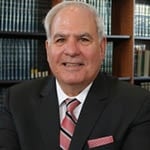 Leonard A. Sloane, Esq. Course Planner |
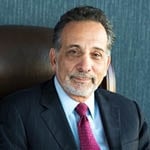 James R. Ronca Esq. |
 Dale G. Larrimore, Esq. |
.jpg) Carin A. O’Donnell, Esq. |
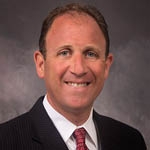 Scott B. Cooper, Esq. |
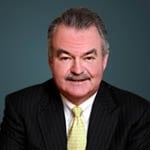 James C. Haggerty, Esq. |
 David L. Lutz, Esq. |
 Erin K. Rudert, Esq. |
 Michael J. Davey, Esq. |
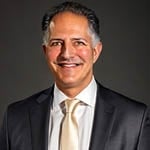 Eric H. Weitz, Esq. |
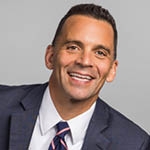 Brendan Lupetin, Esq. |
 David L. Rubenstein, M.D. |
This program has been approved by the PA Continuing Legal Education Board for 5 hours of substantive law & 1 hour ethics law, practice and procedure CLE credit.










Program Titles and Supporting Materials
This program contains the following components:
Media Files
Credit
If applicable, you may obtain credit in multiple jurisdictions simultaneously for this program (see pending/approved list below). If electing credit for this program, registrants in jurisdictions not listed below will receive a Certificate of Completion that may or may not meet credit requirements in other jurisdictions. Where applicable, credit will be only awarded to a paid registrant completing all the requirements of the program as determined by the selected accreditation authority.
How to Attend
Join the self-paced program from your office, home, or hotel room using a computer and high speed internet connection. You may start and stop the program at your convenience, continue where you left off, and review supporting materials as often as you like. Please note: Internet Explorer is no longer a supported browser. We recommend using Google Chrome, Mozilla Firefox or Safari for best results.
Technical Requirements
You may access this course on a computer or mobile device with high speed internet (iPhones require iOS 10 or higher). Recommended browsers are Google Chrome or Mozilla Firefox.
More
Refund Policy
SeminarWeb and Pennsylvania Association for Justice programs are non-refundable.
Privacy Statement
We respect and are committed to protecting your privacy. Read Statement.
YOU MAY ALSO BE INTERESTED IN...

2025 Nursing Home Litigation Webinar
Self-Paced Online
16th Annual Medical Malpractice Seminar - 2024
Self-Paced Online
Nuts and Bolts of a Motor Vehicle Crash Case
Self-Paced Online
